


PART 1 of our investigation.
See also Deep Inside the Rabbit Hole (Part 2)
A husband whose wife had just left him, opening a conversation in a chatbot with: "Can this stay between us?" A retirement letter carrying a technicians full name, his phone number, his home address and his national ID number. A single line asking whether bleach can cure cancer.
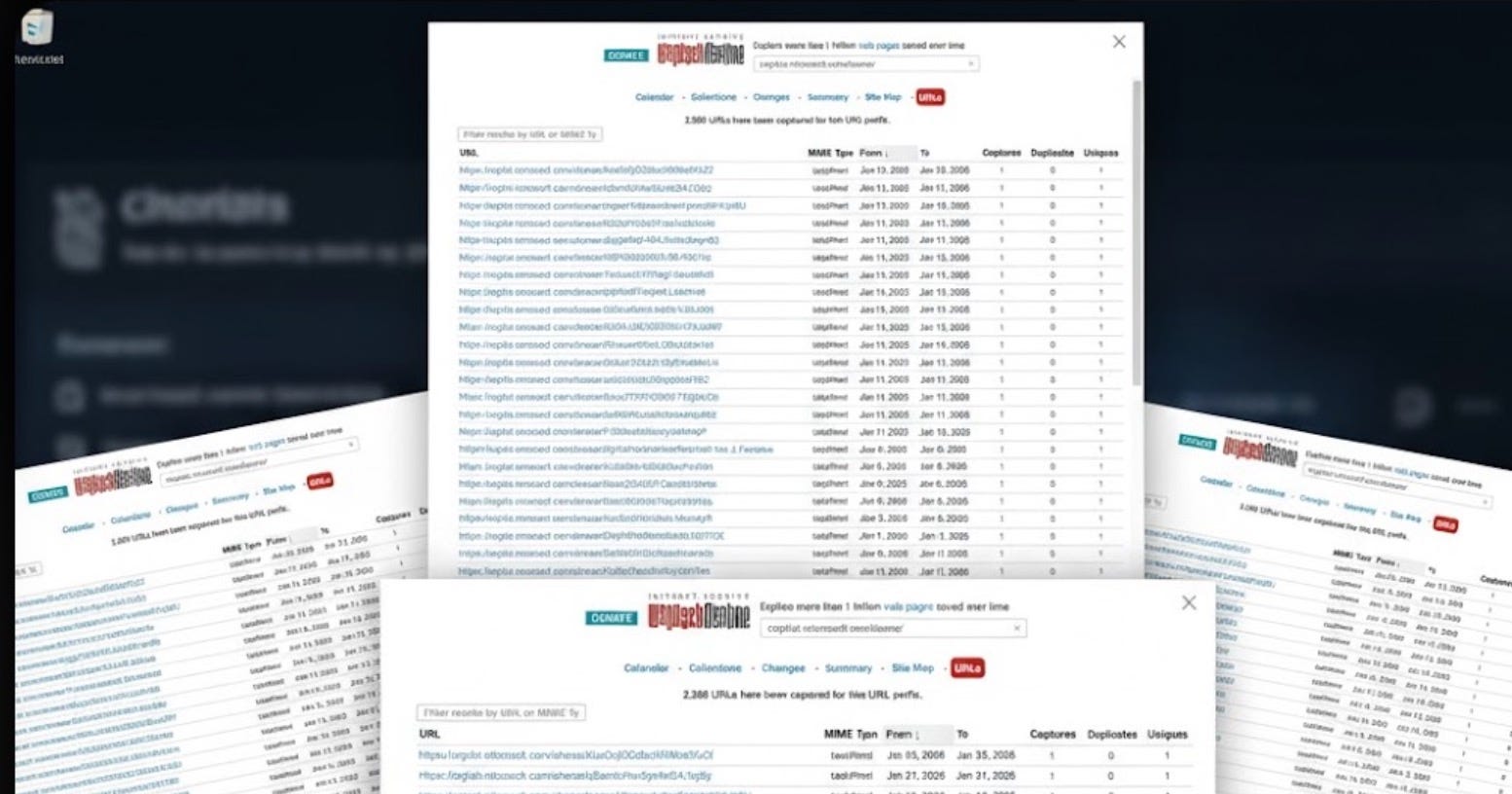
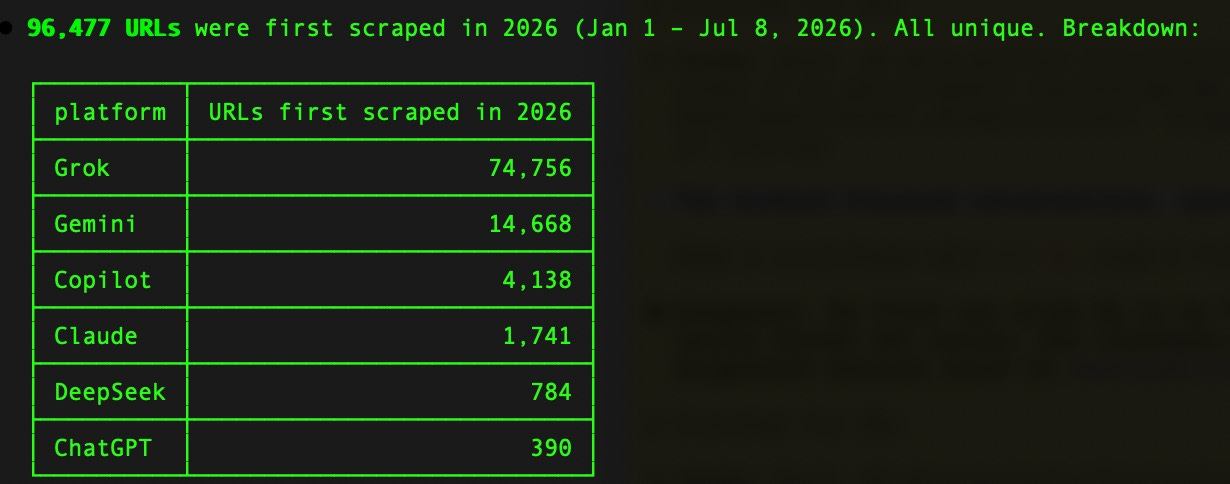
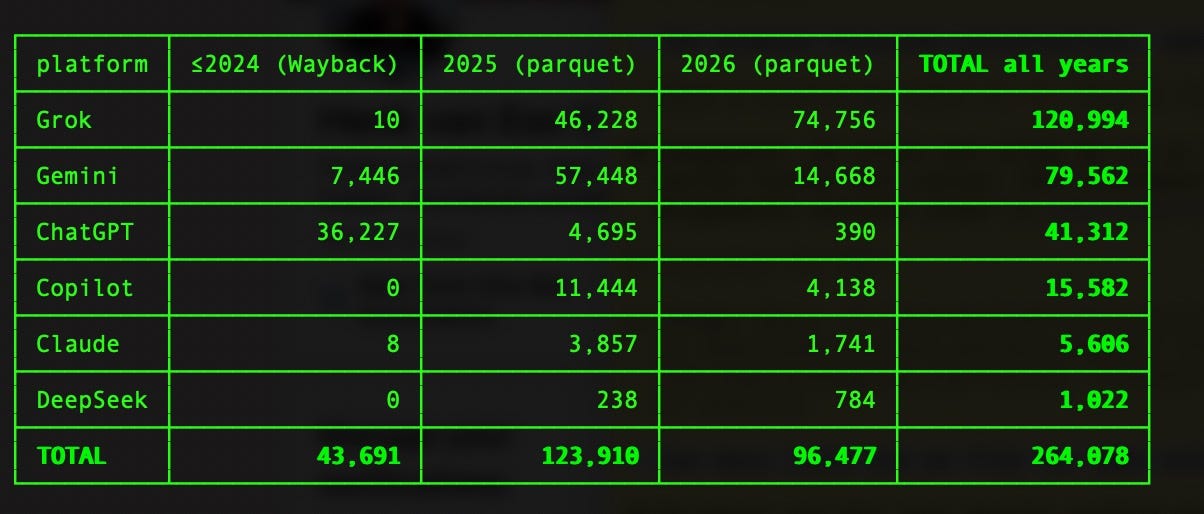
All three are public web pages, still available today, that the people in them almost certainly thought were private. This year alone, across six chatbots — ChatGPT, Claude, Gemini, Grok, Copilot and DeepSeek —Digital Digging found 96,477 shared conversations in Archive.org, some of them readable as a copy , most of them available at the source right now. It looks like people thought "share" means send. But it means publish.
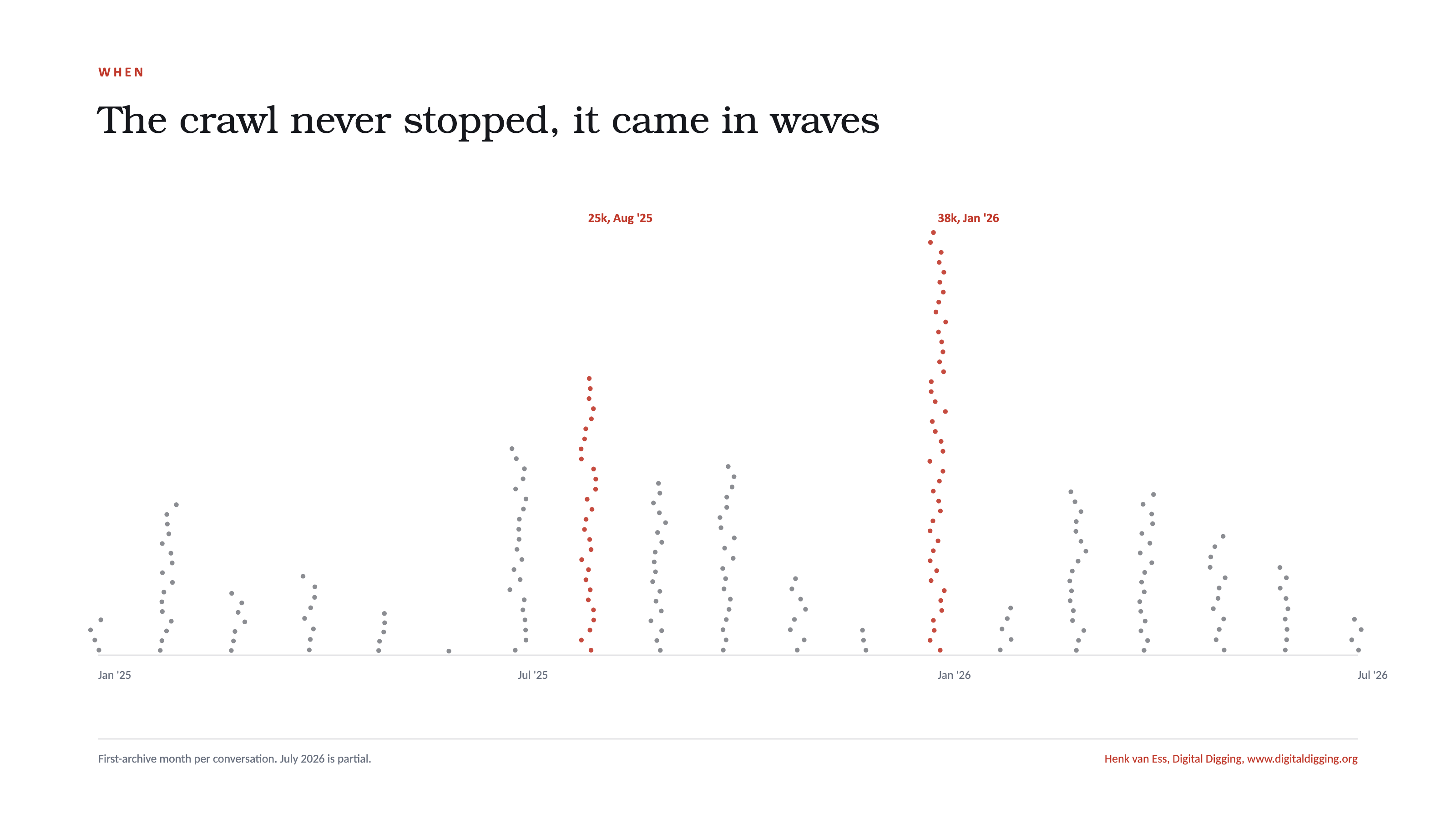
How the chats reached a public archive at all is a genuine puzzle. The obvious answer — that people posted the link somewhere open and a crawler swept it up — barely holds: of these thousands, we could find only a handful ever posted in public. So most of them reached the archive with no public trace of having been shared at all. Then we wondered whether these were older chats simply resurfacing now. They are not:
In 2025, the story was all about ChatGPT. Our confession files found the first of the leaked shared chats; the Washington Post, which asked to use our database, read 47,000 of them. They ran two articles on the story. (1 and 2). OpenAI pulled the shares out of Google, and everyone moved on.
The news now is simpler, and worse: it is all of them — not one, but six chatbots, still sitting open today in Archive.org, in July 2026, one link from anyone. And even ChatGPT is back in the list, although at the bottom.
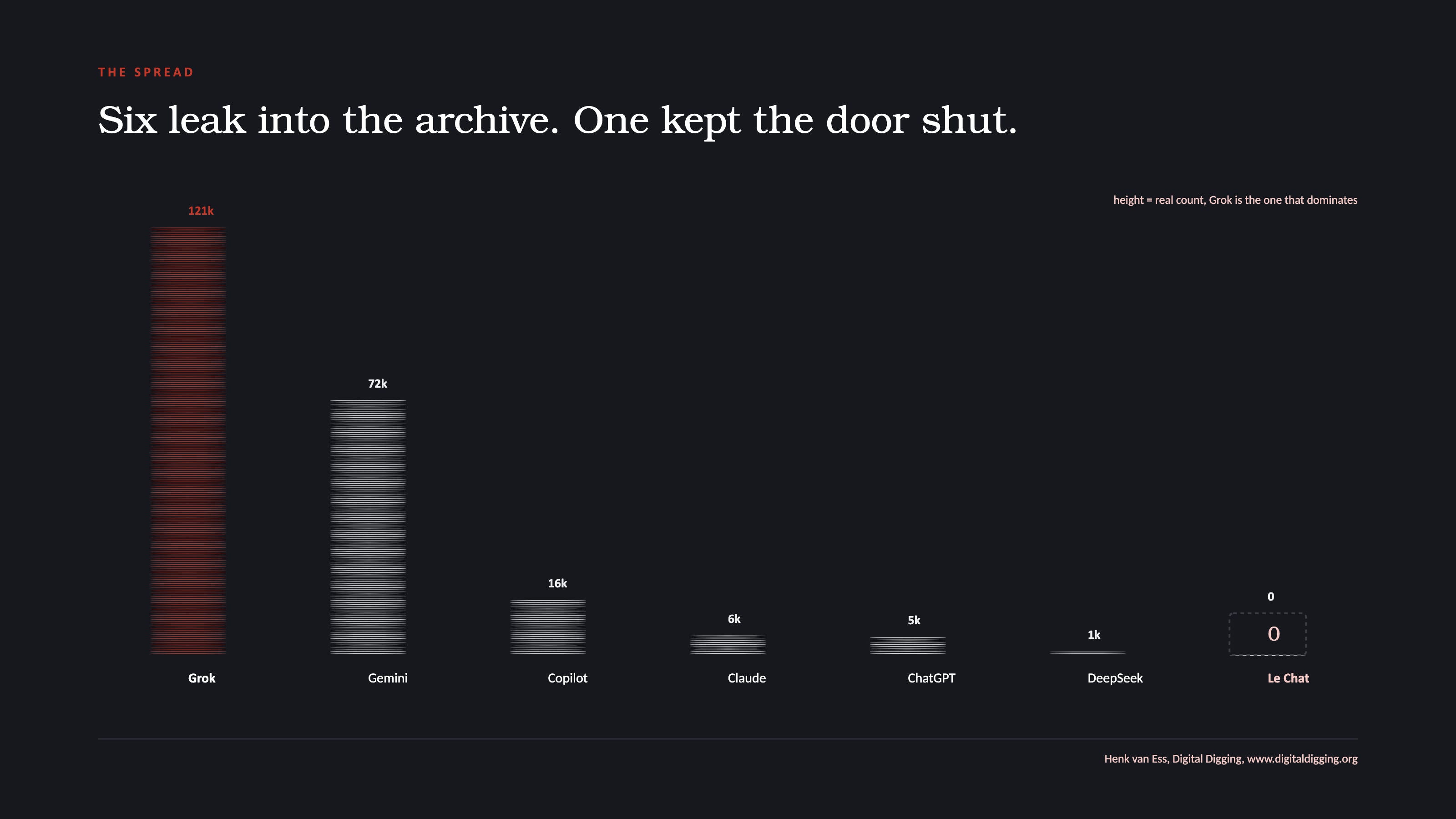
All told, archive.org has logged more than a quarter of a million of these shared chats — 264,078 across the six.
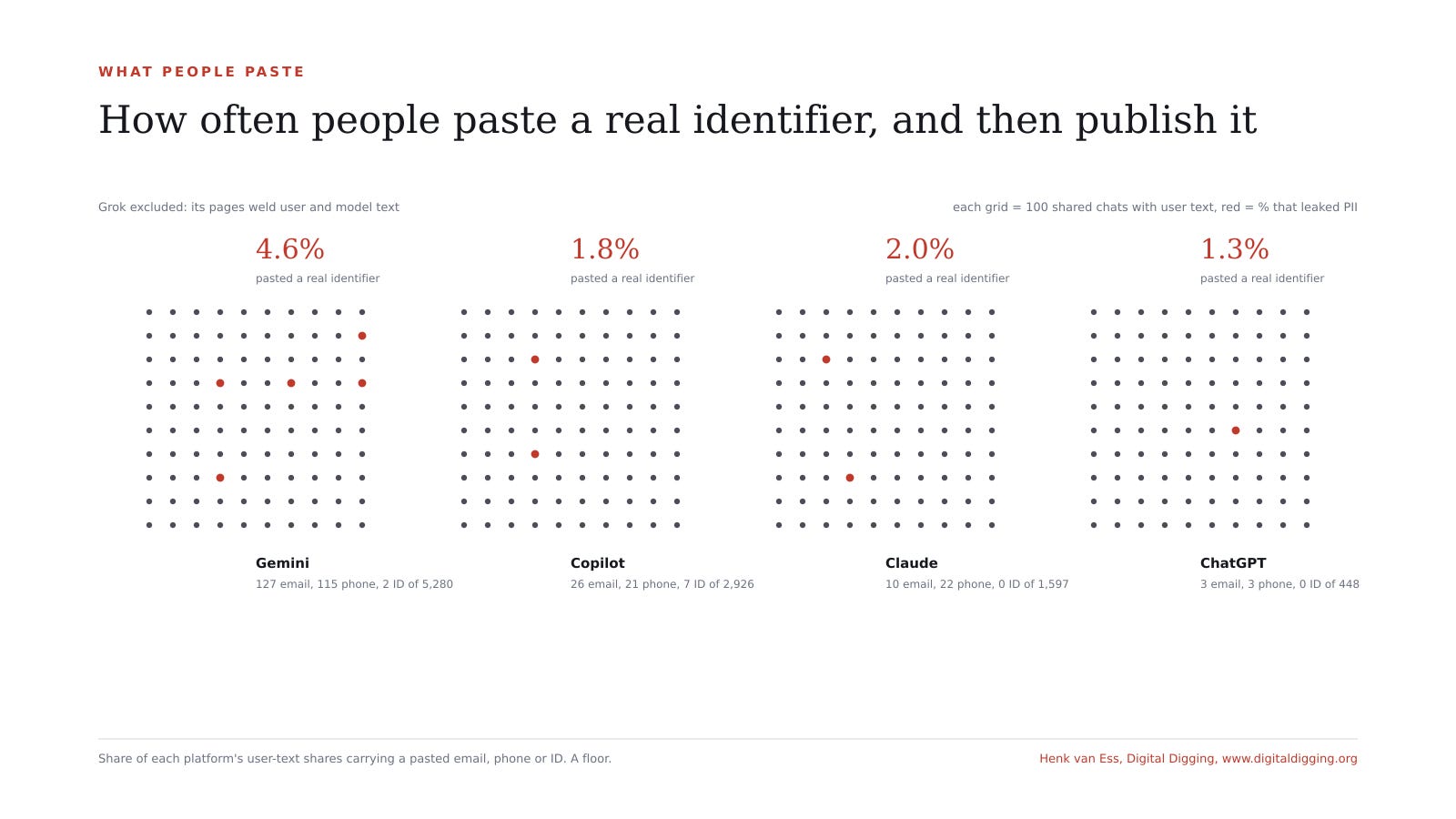
What do people hand these machines? We learned a lot and will publish more about it the coming weeks. It is the ordinary person doing an errand: a letter, a form, a signature, filled in with a real name and address and ID, probably then shared without a second thought. We found the most identifiable information in Gemini, then Claude, then Copilot and then ChatGPT.
Let’s follow one of the conversations all the way down.
Someone in Germany is filling in the last piece of a five-year story.
They have lived in the country since before Brexit. Their visa is good until 2027. They have not left for longer than six months at a stretch — the box that matters. Now they are writing the supplementary letter that turns all of that into a permanent-residence permit, and they want it to sound right, so they open a chatbot and paste in the facts: the address on their registration, the visa date, the five years, the six-month rule they have never broken.
The bot helps. They get their letter.
Then, to keep it — or to show someone — they click the button in the corner. Share.
They think they have made a link. What they have actually made is a public web page that says a foreign national at this address has a visa running out in 2027, filed as part of a residence application. I know, because I read it. So can you.
One page out of many. And it was on Claude, not ChatGPT.
The button that lies
Picture a town square where you live. There is a board on the wall — the one with the lost-cat notices and the room-to-rent cards. Anyone who walks past can read it. Anyone who ever walks past can read it.
Now picture writing your problem on a slip of paper — your pension letter, your visa history, your kid’s swim-school invoice — and instead of handing it to the one clerk you meant to, you staple it to that board. And the button that does the stapling is labelled give this to the clerk.
That is the share button.
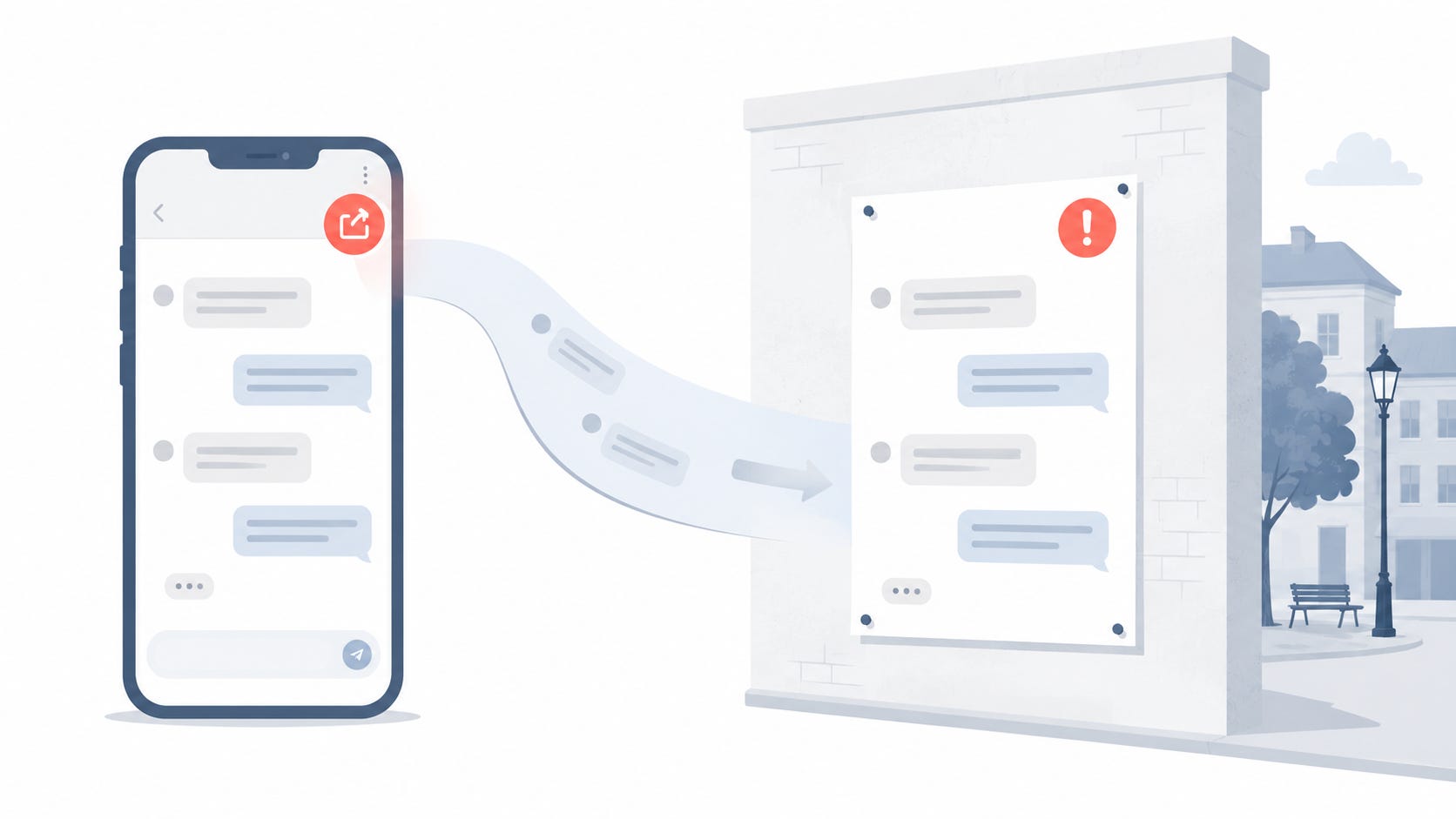
The gap between send this to my colleague and pin this to the town square is the story.
Nothing was hacked to make that page. Someone clicked share, meaning to hand a link to one person, and made a public document instead. The leak is not in the server. It is in the word.
How each page then reached a public archive I can only guess — a shared link is unlisted, so it normally has to get loose first: posted, forwarded, or crawled from somewhere open. But loose they got.
A phone book, not a library
You cannot guess these links: a share URL is a long random string, claude.ai/share/ and then a scramble nobody could type on purpose. Loose in the internet they are needles. Archive.org is what turns them into a list.
But a list is all it is. Open one of these shares on the archive and you mostly see nothing — a logo, a cookie banner, a sign-in wall. The captured page is an empty shell, because the conversation was never written into it: it gets painted in afterwards by code that phones a server, and on a frozen copy that phone call is dead. The archive tells you the chat existed, and where.
So the words in this piece came off the live pages, not the archive — and getting them was the actual work. Each of the six machines hides the conversation somewhere different, so each needed a different way in. Four of them gave it up to a browser patient enough to wait for the page to finish drawing itself. Claude was the one that fought: it runs a bot-check that turns away every automated visitor, and the only thing that got past was a real, visible browser with its robot badge stripped off, parked just off the edge of the screen so the guard read it as a person. The address book was the easy half; the notes at the end give the trick platform by platform.
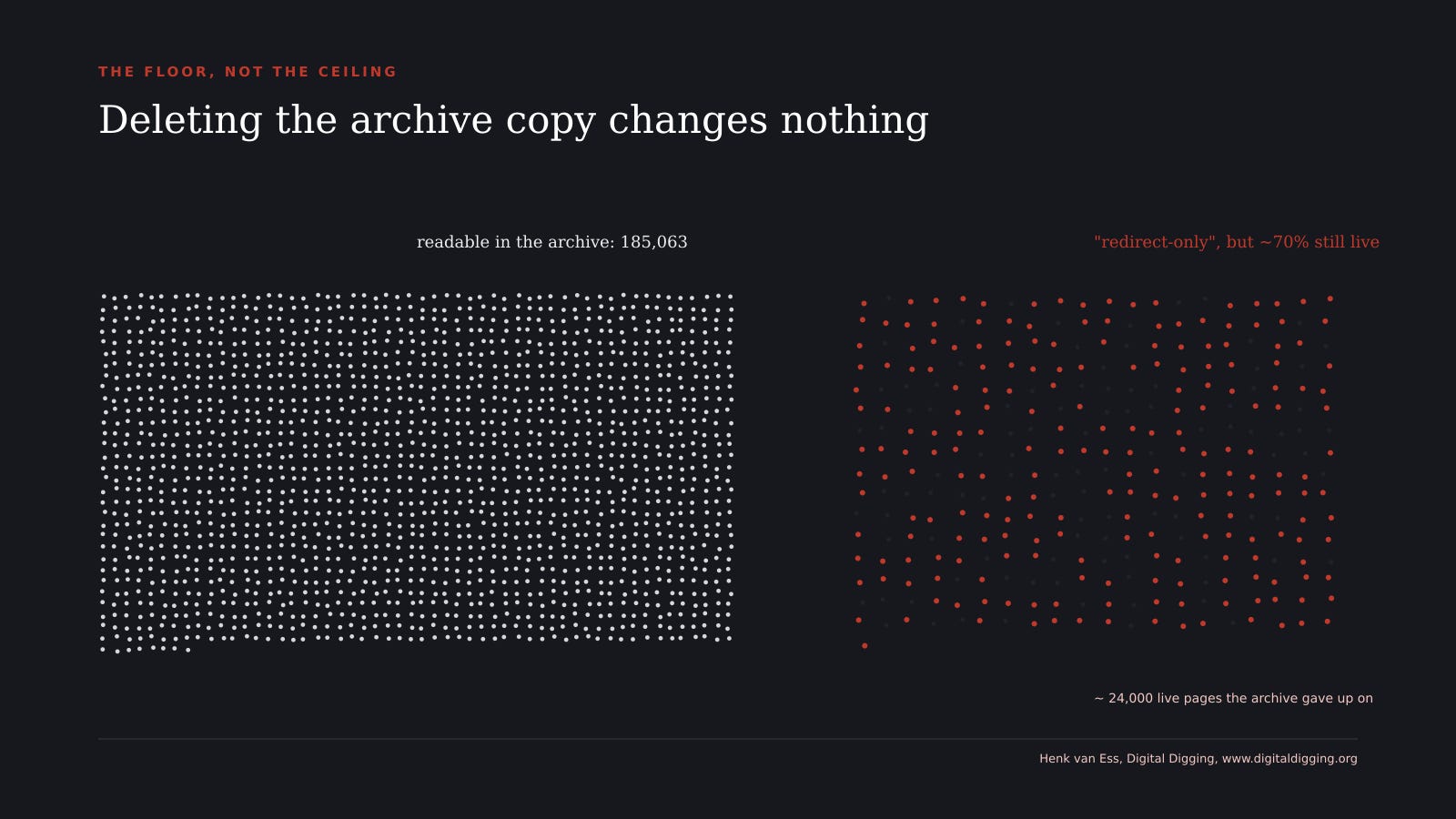
Here is the part that runs against instinct: taking a page out of the archive changes nothing. People picture the archive as the vault — that if its copy is a dead redirect, or if they get it removed, the chat is gone. It is the reverse. The archive is a map, not the vault.
The chat lives on the chatbot, on the original public page, and that is the copy that stays open. Not always the archive keeps a readable version of a single recent share — every one a dead redirect — and yet nearly three in four of those pages are still live at the source right now, one click from anyone. Deleting the archive's copy does not close the page; the page was never in the archive to begin with. And deleting your own chat comes too late: by the time most people would think of it, the page has been public for months, and someone has already read it. Deletion is a gesture. Permanence is the fact.
What people said
Every case below is real, from the 2026 set, on the platform named. Every name, number, and address is masked. I am not linking to the pages: the whole point is to keep the next person out of the archive, not to walk you to the last one.
