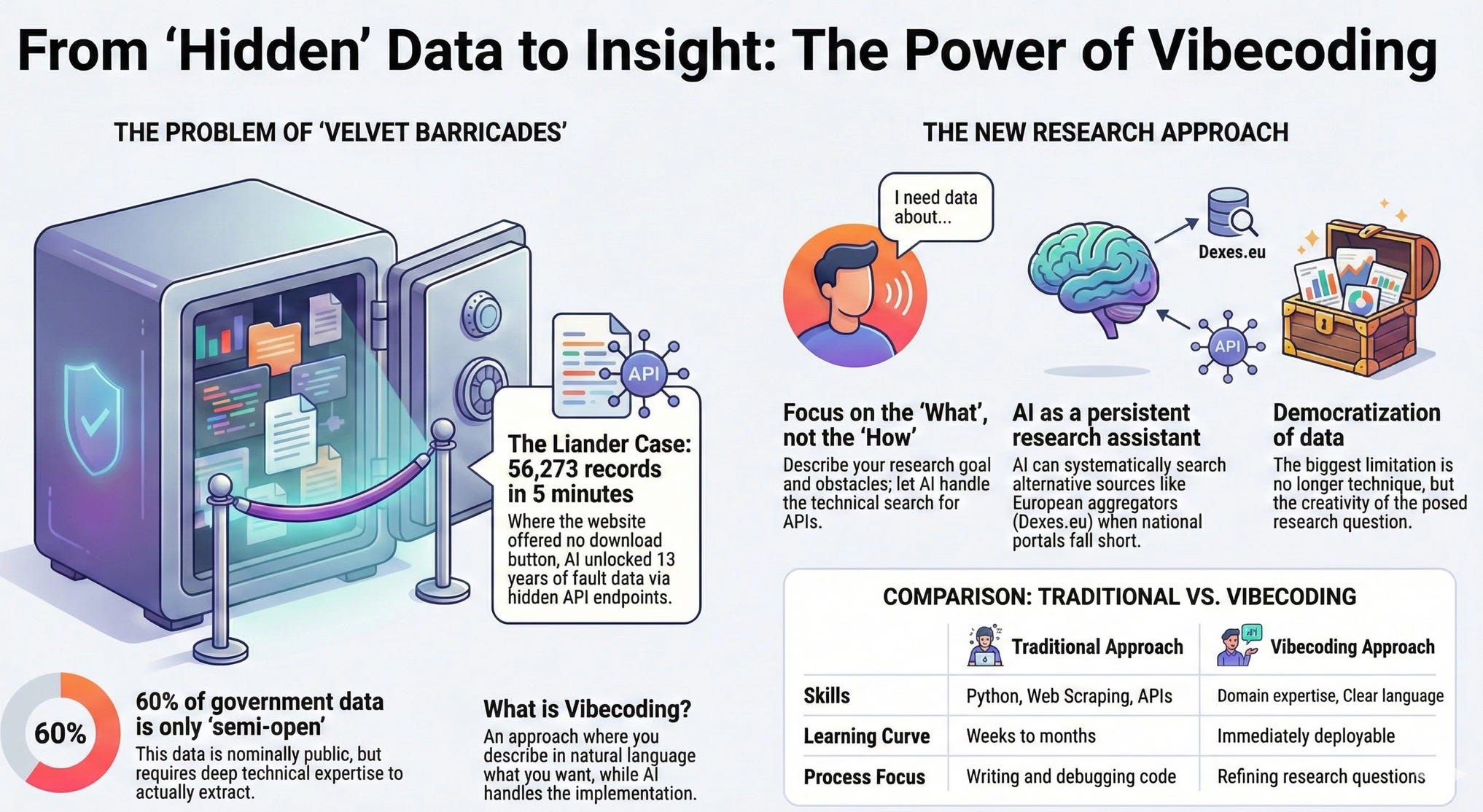


Imagine walking past a fancy restaurant. The menu is posted in a glass case outside. Truffle pasta. Wagyu beef. You can see everything, read every description—but you can’t eat any of it. You’re just looking through glass.
That’s what most public data feels like online.
You find a website with exactly what you need. A map of power outages. A table of housing prices. It’s right there on the screen. But there’s no download button. No export. You can look, but you can’t take it home.
A 2022 study in Scientific Data found that over 60% of government datasets are “semi-open”—technically public, but locked behind technical barriers that only coders can break through. The data sits in an unlocked room, but the doorknob is a puzzle only an engineer can solve.
Until now.
Read also the story below
Using AI to find hidden data sources

The Dutch power outage website showed me a few records and no download button. Five minutes of digital digging later, I had 56,273 outages going back 13 years—none of them visible via normal search. Here's exactly how I did it — and how you can apply this method to your own research.