
Nano Banana 2 removed from Google Earth
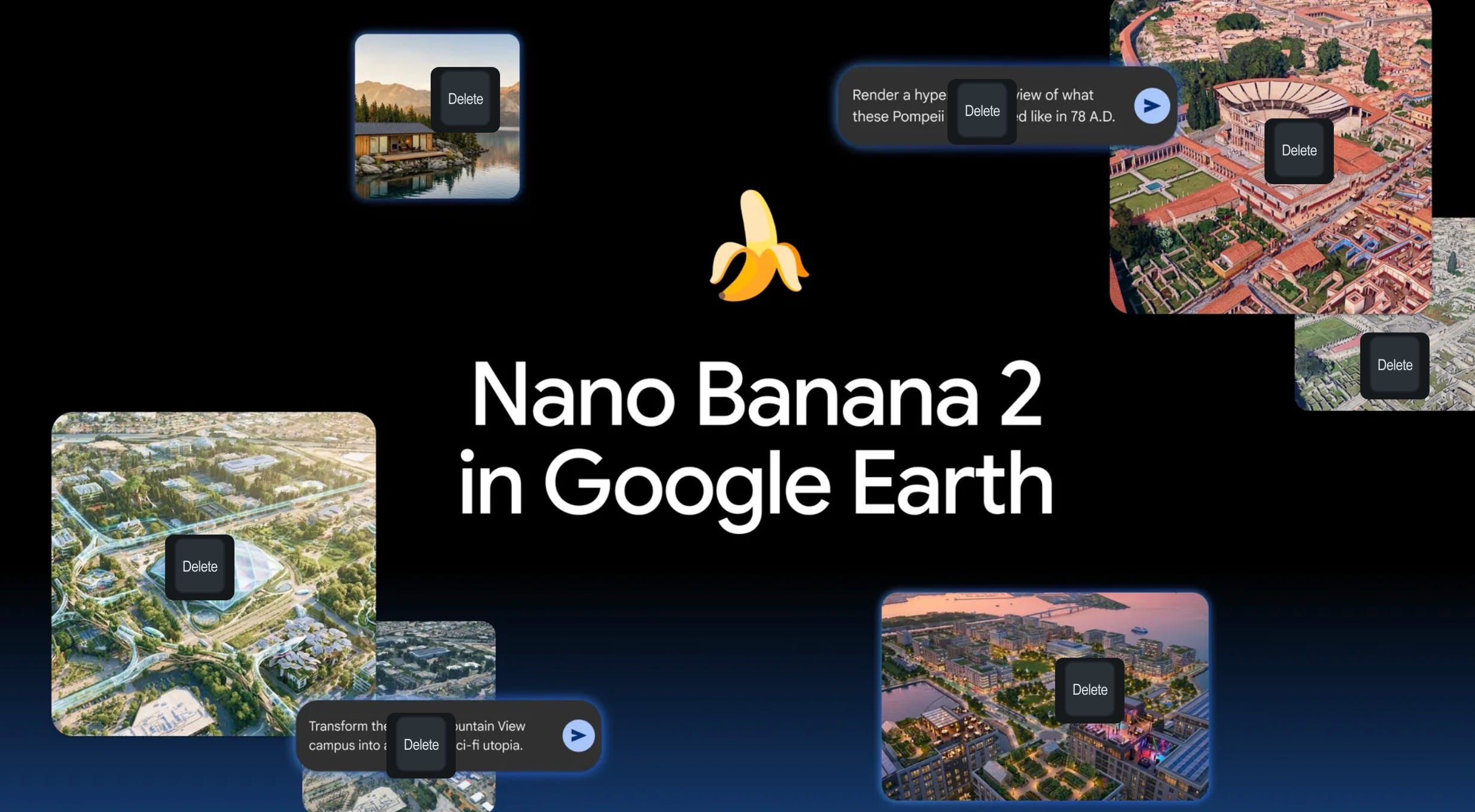
Google has rolled back the image generation feature it launched in Google Earth on 30 July. The tool let anyone zoom to any coordinates, type a sentence, and get back a photorealistic image built on Google’s own satellite, aerial and 3D imagery of that spot. It went live worldwide, on the web, with no waitlist. It was withdrawn on 31 July.
Google’s statement, posted by its News from Google account and added to the top of the original announcement:
We know that people uniquely trust Google Earth for a reliable view of the world. We’ve seen geospatial professionals using this feature for a range of useful purposes, however we’ve also seen people sharing screenshots of generated imagery that appear to violate our policies. So we’re rolling back this feature in Google Earth while we work on implementing stronger guardrails. It’s important to note that generated images didn’t appear in the main Google Earth experience for others to see and were watermarked as AI generated.
Earlier, before the rollback, Google had told me it prevents image creation on harmful topics and that every generated image carries a SynthID watermark readable through the Gemini app or Google Lens. On Thursday night I used the tool to place refugees near the Mexican border, a nuclear plant in Iran, a fatal crash on an Amsterdam street, and a hospital with a bomb crater in Gaza. Nothing was refused.
NPR generated Iran’s Kharg Island oil terminal on fire and the US Capitol under flood water. Futurism produced the White House as a battlefield and a Pennsylvania town hit by drought and wildfire.
The feature is paused, not cancelled. Google says it is working on stronger guardrails.
Coverage of Digital Digging posting: BBC - France 24 - Financial Times · NPR · TechBrew- Futurism · The National · IBTimes · Tech Brew · FlowingData - The Verge - PC Gamer and many more


