



Google is rebuilding Search to answer instead of point. It still shows you the sources — it just decided, before you did, how few you’d need. Here’s the fix, and why the old operators matter more now than they ever did.
On May 19 Google announced the biggest change to its search box in twenty-five years: an AI that reads the web and hands you the verdict, plus background agents that search while you sleep. For a casual user that’s convenience.
For a researcher it’s a problem with a name — the AI chooses the sources for you. It still shows them, in a panel on the right, and you can keep digging the way you would in Perplexity. But it decided how many to read and which ones counted, where you used to wade through hundreds and pick for yourself. The fix is not a different search engine; it’s a different stance, and a return to the tools the AI layer is busy hiding: force the raw index with &udm=14, start from the primary source instead of the search box, and chain the operators — site:, filetype:, intitle:, after: — that turn Google back into an index you steer instead of an oracle you trust.
The problem, precisely
As if we didn’t have enough problems. Google’s normal search quietly dropped less-popular keywords. It favours popular content over exact matches. It bends results to your location. It caps you at a few hundred results no matter what. Those biases pushed the niche, the precise, and the inconvenient down where most people never look. That was the old complaint, and the answer was always the same: operators, to overrule the algorithm and make it show you what you actually asked for.
The AI layer fixes partly that problem but with a price. The first is a narrowed source base. The sources don’t vanish — Google lists them in a panel on the right, and you can follow up the way you would in Perplexity. The catch is that the answer often rests on a handful of pages the AI picked, and it made that call instead of you. Where you once chose how wide to cast — first result or three-hundredth — the machine now sets the width by default, and Pew tracked 68,879 real searches to find that just 1% of users ever open the source links to widen it back. The second is a polluted pool to pick from. A peer-reviewed study for the ACM Web Conference 2026 ran the experiment — when 67% of a search pool was AI-generated content, over 80% of what the system surfaced was synthetic, while the answers still read clean and confident. The lights are on. Nobody’s home.
It helps to picture why the web is going along with this. Imagine a theatre where the actors keep performing to an empty house. One spectator is left in the front row: a robot, taking notes, who will later tell the outside world what the play was about. So the actors start performing for the robot — shorter, louder, every nuance cut, because the robot doesn’t care for nuance. That’s what’s happening to the web. Sites no longer write for the person in the seats; they write for the machine in the front row. And the person only ever hears the robot’s summary.
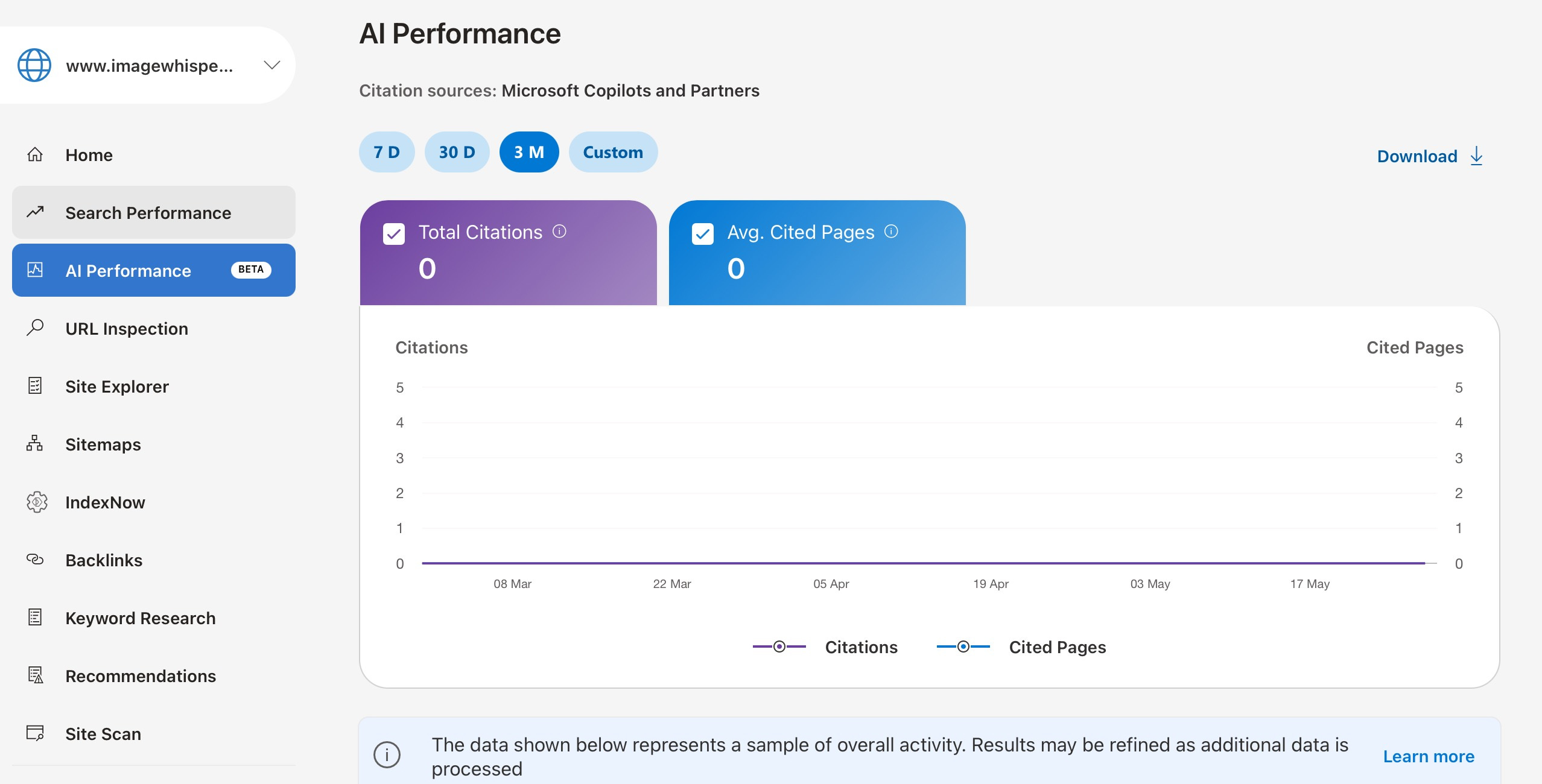
I came across that machine recently. It was an AI dashboard from Microsoft Copilot, but it could have been anyone’s — a meter for publishers. A site used to watch visitors: how many came, how long they stayed, where they clicked. This panel watched two different numbers. Total Citations, how often the AI quoted your pages, and Cited Pages, how many of your pages it judged worth quoting at all. The counter that matters no longer counts people. So sites write to be quoted: compact, confident, authoritative in tone — which are exactly the qualities a researcher is trained to distrust. No hedging, no nuance, no “according to whom.” Then the AI sands off whatever nuance survived. You end up with an answer written to be cited, summarized by a machine that strips out the doubt, shown to you without the name of who said it. Three filters between you and the truth, and at each one a little of it goes missing.
Google used to send you out onto the web. Now it wants to be the web. The narrowed source base you can widen back with technique. The polluted pool you guard against by archiving what you find. Both start with refusing the pre-chewed answer.
Fix 1: strip the AI off the page
The fastest move first. Add &udm=14 to the end of a Google results URL and you get the classic ten blue links with the AI panels gone — no Overview, no “People also ask,” no carousels. Bookmark a version of it, or set a udm=14 search shortcutas a custom engine in your browser so plain, link-only Google is one keystroke away. The Web tab in Google’s own menu does the same job, one click deeper.
This is the smoke-detector rule. A useless smoke detector says “your house might burn down.” A useful one says “there is no extinguisher on this floor.” The AI Overview gives you anxiety dressed as an answer. The blue links give you a place to go. As a researcher you want the place to go.
There’s a quicker, scrappier version doing the rounds: end your query with -ai. Be precise about what it is, though — it’s just the minus operator excluding the word “ai,” not an official switch, and it suppresses the Overview only on some queries. Handy in a pinch; &udm=14 is the one that works every time.
